
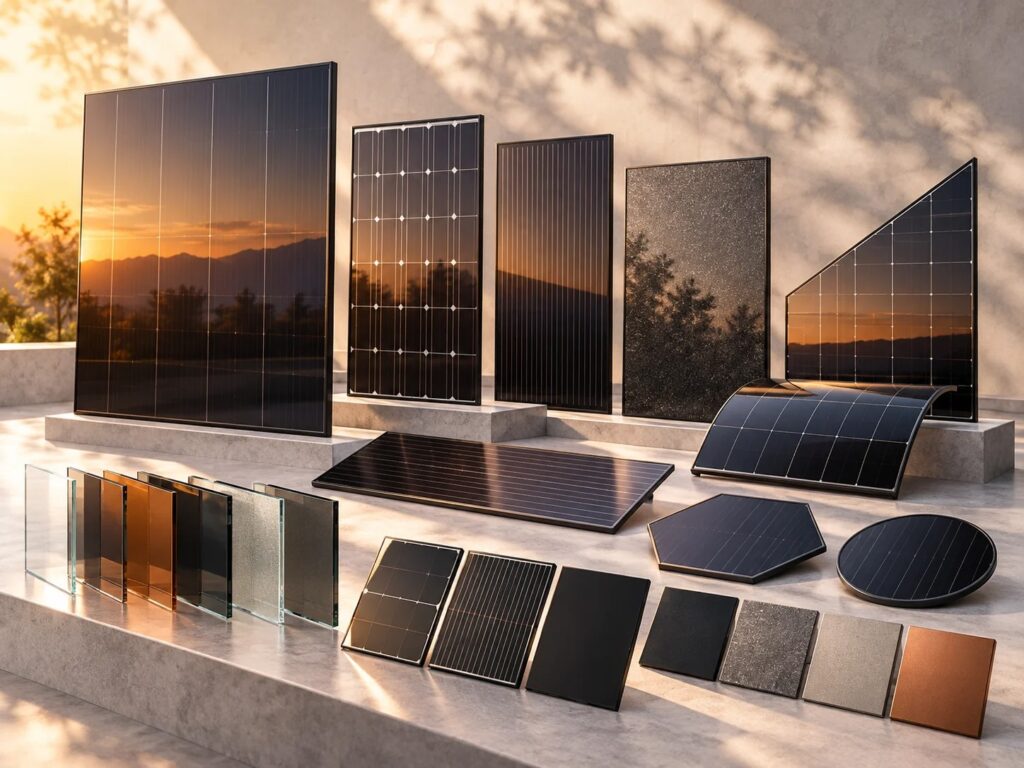
Cover visual: AI-generated concept illustration, not a completed project or certified product.
OEM PROCUREMENT RESOURCE
Custom BIPV Module RFQ Checklist for Roofing & Facade Manufacturers
A useful request for quotation does more than request a price per watt. For a non-standard building-integrated photovoltaic product, the drawing, mounting interface and technical priorities determine what a manufacturing partner can evaluate and quote. This checklist helps an OEM development team prepare an effective first enquiry.
1. Describe the End Product
- Solar roof tile, shingle, integrated metal roof, facade cladding or other BIPV application
- Whether the PV component replaces part of the building envelope
- Proposed installation environment and geographic markets
- Current development stage: concept, prototype, validation or production transfer
2. Provide Mechanical Drawings
- External length, width, thickness and acceptable dimensional tolerance
- Glass configuration, finish and edge treatment
- Mounting positions, support conditions and permitted rear clearance
- Position of cable exits, connector storage, attachment or overlap zones
A dimensioned drawing, even preliminary, is much more useful than a photograph without measurements.
3. Define Electrical Targets
- Target rated power and design flexibility
- Desired voltage and current ranges
- Maximum system voltage and inverter/power electronics interface
- Required bypass arrangement and anticipated shading patterns
- Preferred cell technologies, if any: BC, TOPCon or alternatives
Module voltage and current depend on the internal cell layout. A fixed outer size can restrict the choice of cell format and therefore the achievable electrical design.
4. Specify Materials and Appearance
- Front/rear glass thickness, treatment and preferred color
- Cell color, front-side appearance and visible spacing
- Encapsulation and edge sealing preferences, if relevant
- Junction box dimensions and position
- Net cable length, cross-section and connector family
Request actual samples for critical aesthetic requirements. Written descriptions such as “full black” may be interpreted differently by different teams.
5. Clarify Quantity and Qualification
- Prototype quantity and design-freeze milestones
- Indicative production volume — forecast, not a purchase commitment
- Required market standards and certification approach
- Required mechanical, environmental and safety tests
- Desired confidentiality and drawing-control arrangements
Existing PV module certifications should not be assumed to transfer automatically to a different bill of materials or size. Agree how the final design will be assessed before committing to commercial production.
6. A Concise First RFQ Is Enough
It is not necessary to release every confidential engineering detail in an opening email. Start with the intended application, approximate dimensions, target electrical characteristics and development timeline. More detailed drawings can follow under an appropriate NDA after initial fit is established.
Request a Technical Discussion
FGNEX provides technical information for OEM product teams. To discuss custom module manufacturing and feasibility, see FGNEX SOLAR custom BIPV modules or send an enquiry through its technical contact page.
Solar Roof OEM technical requirements · More technical resources